



Talc
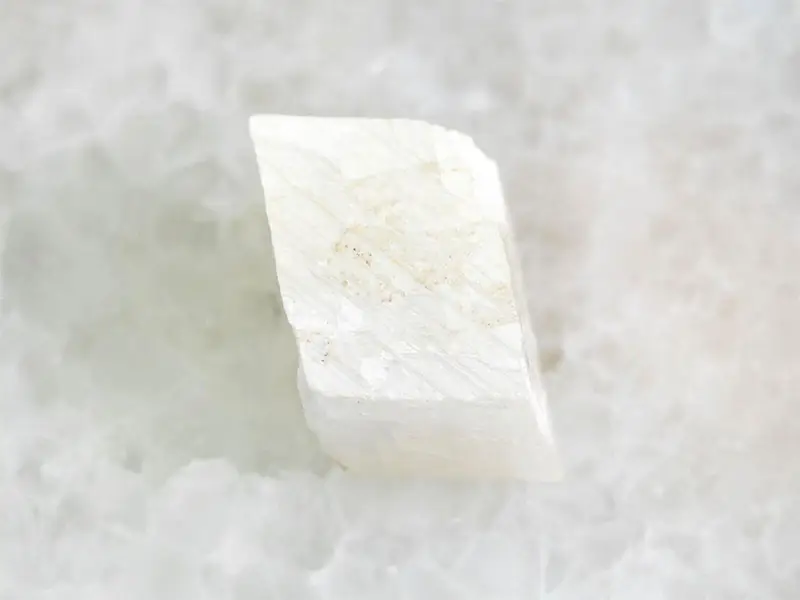
Talc is a hydrous magnesium silicate with the theoretical formula (Mg₃Si₄O₁₀(OH)₂)
Commercial grades of talc often vary considerably from the theoretical purity. Such products may be a mixture of pure talc mineral and minerals such as dolomite, calcite, quartz, diopside, serpentine, magnetite, pyrite, tremolite-actinolite and mica in different proportions. Commercial talc is used under various names in the industry.
Talc is used in ceramics, paint making, roofing, insecticide production, rubber and paper industry, cosmetics and pharmacology, asphalt filler, animal feed and fertilizer production. Depending on the intended use, softness, oil absorption, moisture content, melting point, specific gravity, thermal and electrical conductivity and chemical analysis are important.
Talc, a naturally occurring hydrous magnesium silicate mineral, plays a critical role across a wide range of industrial applications, particularly as a functional mineral filler and additive alongside calcium carbonate. Characterized by its soft tactile feel, a color scale ranging from pure white to light greenish tints, and a fine-grained microtexture, this mineral is formed through geological metamorphism—primarily within metamorphic rock formations and hydrothermal alteration zones. Talc is generated via the hydrothermal alteration and reaction of magnesium-rich ultramafic and carbonate rocks with aqueous fluids, a crystallization process that fundamentally dictates its unique chemical and physical properties. Exhibiting an extensive usage spectrum ranging from polymer composites and coatings to paper manufacturing, cosmetics, and the pharmaceutical industry, high-purity micronized talc has become an indispensable industrial raw material in modern manufacturing.
Naturally occurring hydrous magnesium silicate (Mg₃Si₄O₁₀(OH)₂);
- Offers exceptional lubricity, rheological control, and bulk filling properties due to its platy morphology and lamellar crystal structure,
- Provides high machinability (ease of micronization and milling) as the softest mineral on Earth (Mohs hardness of 1),
- Serves as an ideal barrier against moisture and offers high oil absorption capacity owing to its hydrophobic (water-repellent) and oleophilic (oil-attracting) surface characteristics,
- Provides high thermal stability by retaining its structural integrity at elevated temperatures,
- Exhibits chemical resistance against acids, bases, and high temperatures due to its chemically inert structure.
- Furthermore, the chemical inertness of the mineral enhances its multi-functionality, shelf-life stability, and safety across diverse industrial sectors.
Cosmetics and Personal Care Industry
- Utilized in cosmetic formulations (baby powder, loose and pressed facial powders, foundations, etc.) as an anti-irritant, anti-friction, and moisture-absorbing functional filler,
- Delivers a velvety dry feel to finished formulations due to its high oil and moisture absorption surface area,
- Imparts opacity (hiding power), smoothness, and a soft-touch texture in color cosmetics and makeup products,
- Provides low surface friction, ensuring lubricity and a smooth, homogeneous application feel on the skin surface.
Polymer and Plastics Industry
- Optimizes melt flow behavior in thermoplastics (such as PP, PE, and engineering plastic compounds) and ensures surface smoothness during extrusion and injection molding,
- Increases dimensional stability and rigidity of molded parts by reducing the coefficient of linear thermal expansion (CLTE),
- Enhances tensile, flexural, and impact resistance (mechanical strength) of polymer components used in the automotive and appliance sectors,
- Improves surface planarity, thereby upgrading downstream paintability and coating adhesion performance.
Paper and Paperboard Industry
- Imparts high opacity, microstructural smoothness, and brightness/whiteness to paper sheets,
- Enhances print quality and sharpness by reducing surface roughness,
- Reduces production costs and optimizes expensive cellulose pulp consumption when used in synergy with white pigments (e.g., precipitated or ground calcium carbonate - PCC/GCC, or kaolin),
- Improves the retention and ink absorption capacity of the paper surface.
Paint and Coatings Industry
- Utilized in industrial paints and architectural coatings as a light-reflecting, rheology-controlling, and intra-film anti-friction additive,
- Blends seamlessly with high-whiteness color pigments to balance the pigment volume concentration (PVC),
- Delivers matting effects, high hiding power, and uniform texture control,
- Prevents micro-cracking during curing and drying stages, imparting film flexibility and corrosion resistance,
- Retains film stability even in aggressive chemical environments due to its acid- and alkali-resistant inert structure.
Ceramics and Glass Industry
- Preferred in ceramic body and glaze formulations as a thermal insulation and fluxing agent due to its high temperature resistance (withstanding up to 1300°C without melting or structural breakdown),
- Prevents warping, shrinkage defects, and cracking of ceramics during the firing process,
- Imparts microstructural smoothness, glass-phase formation, and gloss on product surfaces,
- Elevates final product quality by enhancing high-temperature mechanical strength,
- Provides dielectric strength and electrical insulation properties in electrotechnical ceramics.
Pharmaceutical Industry
- Used as a binder, anti-tack lubricant, and glidant in direct compression and granulation pharmaceutical tablet manufacturing,
- Imparts anti-adherent properties that prevent sticking to tablet dies while facilitating smooth swallowing characteristics,
- Enhances the chemical stability of active pharmaceutical ingredients (APIs), thereby extending shelf-life.
Niğtaş Talc Products
Niğtaş combines the inherent mineralogical advantages of talc with advanced grinding and classification process control, particle morphology optimization, and application-specific surface modifications to deliver customized solutions that outperform standard market alternatives. Micronized talc grades developed specifically for each industrial application simultaneously ensure mechanical performance and cost optimization. Formulations featuring specialized particle size distributions with low thermal conductivity are ideal for energy-efficiency-driven applications. Niğtaş’s specialized processed talc products deliver high production efficiency, quality consistency, and cost advantages across polymer, paint, paper, and filler manufacturing processes.