



















Some Information About Calcite
Features
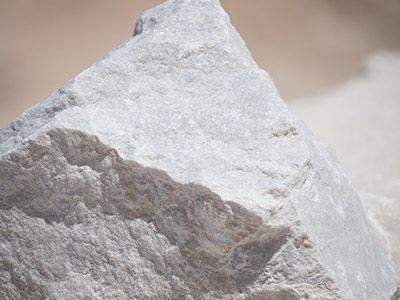
Calcite; chemical formula CaCO3, crystal grain size between 1 mm-10 cm, is a mineral that is the building block of limestone. According to Mohs hardness chart, its hardness is 3, its specific gravity is 2.7 gr/cm3 at 20 °C, its solubility is 0.0015 gr/cm3 H2O at 25 °C and it has beautiful slices according to the rhomboeder surfaces (1011). Easily refractive, glassy, translucent and matte in nature. In the variety called Island Spat, it is optically negative and its thin sections are colorless. It dissolves in acid and produces CO2 bubbles. Double refraction is an important feature. Therefore, it shows the writings as double. The pure ones contain 56% CaO, 44% CO2 and a small amount of Mg, Fe, Mn, Zn, Sr, Cu, Pb, Co, Ba, Cr and As depending on the rocks and minerals it is found with. It does not melt in the blower but its color changes and becomes white or dull (Şahin, 1978). Impurities are MgO, SiO2, Al2O3, Na2O, TiO2 and P2O2 as oxides and affect the quality negatively depending on the industry in which it is used.
Terms of Use
Limestone (Limestone):
It is a massive, white monomineralic rock consisting of calcite crystals of various grain sizes. Side minerals are pyrite, galena, rutile, zircon, gypsum, barite and feldspar.
Marble:
It is a metamorphosed limestone or limestone consisting of calcite with a crystal grain size larger than 0.1 mm. Side minerals are silicate, feldspar, mica, iron oxide and fluorite.
Micronized Calcite:
It is the commercial name of calcite ground to 1-100 mm size. It is generally used in filling and coating industry.
Chalk:
It is a soft rock composed of fine-grained calcite containing marine animal remains.
Slaked Lime:
CaCO3 is CaO obtained by heating (calcination) of limestone with low CaCO3% in a kiln at 825 °C.
Lime Cream:
CaCO3 is the name given to Ca(OH)2 obtained by the treatment of slaked lime with water (hydration).
Precipitated CaCO3:
CaCO3 is CaCO3 obtained by treatment of lime cream with CO2 (Carbonation). CaCO3 is obtained by treatment of CaCl2 with Na2CO3 and is used in other places other than the ceramic industry.
Quality Determination Terms
Abrasion Value:
The weight loss in mg of 100 g of dry CaCO3 dispersed in 3.2 liters of pure water after 6000 cycles in the abrasion device is an important value in the paper industry.
Dispersal Velocity:
CaCO3 grains do not agglomerate and disperse in the environment where they are used. It is important in the filling industry.
It is the coating of grains with various aliphatics to reduce and lower the gap between CaCO3 grains.
Degree of Whiteness:
It is a value obtained as a result of comparison with standard MgO whiteness and is the % of light reflectivity of the material. This value should be 96-100% for calcite, 96% for marble and 93-96% for chalk. It is a sought-after property in paper and other industries where whiteness is important.
Specific Surface:
It is the value of 1 g CaCO3 in cm2 of total surface. It is sought after in the coating and plastic industry.
Preparation and Enrichment
Before calcite is used industrially, it is subjected to crushing, grinding, classification, magnetic separation and flotation processes depending on the structure of the material. Thus, calcite becomes homogeneous both materially and chemically.
Crushed:
Jaw, impact, hammer crushers and rollers are used for crushing. The crusher is selected according to material properties, hardness, plant capacity and product size. Jaw crushers give flat and long, impact crushers give cubic or round products.
Grinding:
Rod and ball mills, vertical mills, ring mills, rotary mills and pulverizers are used.
Mills, ring mills and vertical mills are used together with a classifier. A special classifier is used for wet grinding and an air separator or filter for dry grinding. When a ball mill and ring mill are used for dry, a cyclone or dust collector is used together with a fan. Vertical mills are a new technology and their advantages over other mills are as follows:
- Low set-up costs
- Cheap to operate and low energy consumption
- Runs quietly
- Small footprint
- Few moving parts
- Excessive grinding and little idle time
- Internal volume capacity utilization is high.
Screening and Classification
Sieving can be done wet to classify the material, to wash away sand, clay, etc. that may be present with the material. Flat, conical, vibrating, shaking and rotary screens are used for screening. Air separators or cyclones are used for material with a grain size of less than 147 microns.
Flotation:
Before processing, the material classified below 74 microns is deglazed by centrifuge or cyclone. Calcite is floated with fatty acids and soap at pH 8.5-9. Sericite, quartz and other silicates are suppressed with tannic acid, quebracho or calgon. Na2CO3 and Na2SiO3 are used as control reagents. Reagents can be fed through the conditioner or directly into the flotation cell at a solid concentration of 20%. NaOH is also used to increase efficiency. Flotation time can be 10-12 minutes.
Areas of Use
Paper
It is used as filling and coating material. Thus, the surface is hardened, flattened and the color is uniform (Şahin, 1999). Other chemical values vary according to the paper type. Whiteness should be at least 94% and the size should be 1-100 microns depending on the place of use. Due to its oil absorption feature, it allows the ink to dry quickly and thus it is used in the production of newspapers, magazines and quality paper. It is used as a filler in cigarette paper. TS 11653 “Calcite Used in Paper Industry” and American ASTM D 1199 standards have been published on this subject.
Paint
Since it is cheap, it is used instead of pigment in paint and as a filler to prevent corrosion of steel and to obtain a thick film in a single coat and to increase the resistance of the paint to water and chemicals. Ba, Cr and As should be in specified ratios in toy paints. CaCO3 % should be at least 95 for limestone, at least 99 for marble and at least 98 for marble, which does not contain hard materials, and 99 for crystallized limestone. Instead of the canceled TS 7047 “Calcium Carbonate – Used in Paint Industry”, TS 11296 “Fillers Used in Paints”, American ASTM D 1199, British BS 1795, Indian IS 8767 and Iranian ISIRI 2399, as well as TS EN ISO 3262-4, TS EN ISO 3262-5 and TS EN ISO 3262-6 standards for paint raw materials have been published.
Tire
It is used as a filler and the grains should be smaller than 20 microns, round in shape and well dispersed in the tire compound. It is used where there is no need for strength, where it is not subject to abrasion and where there is no need for carbon black. It allows the tire to be used in overload without loss of softness. Thus, there is no elongation and stretching. Color is important in white tires. CaCO3 should be at least 92% and 98% when chalk is used and Cu, Mn and Pb should be in certain ratios. TS 4160 “CaCO3, Used in Active-Rubber Industry TS ISO 5796 “Tire Pulp Additives-Natural Limestone-Test Methods”, TS 6758 “Tire Pulp Additives-Natural Limestone-Test Methods”, American ASTM D 1199, Indian IS 917, Japanese JIS K 6233 and Iranian ISIRI 2399 standards were published.
Plastic
It is used in plastics as a filler because it provides durability, easy demolding and uniform thickness. It is also used in plastics for hardness, flexibility, strength, bending, internal stress prevention and high temperature resistance. It should not contain heavy metals, should have low oil absorbency, should not absorb other chemicals and softeners, should have a high degree of whiteness, should not cause abrasion in machines, should be easily dispersed, should increase impact strength, should have round grains of 3-0.02 microns in size and CaCO3 should be at least 95%. Iran ISIRI 2399 standard has been published.
Animal Feed
Ca is used as a filler in animal feed as it is essential for the growth of bones and teeth. CaCO3 should be at least 92%, SiO2 should be quite low and elements such as As and F should be in certain proportions. The size should be 400 microns for chick feed, 3 mm for large poultry and less than 25 microns for all large animals. The rate of foreign matter in the material to be used should be maximum 3%. TS 8606 “Animal Feeds – CaCO3 Compounds”, TS 8599 “Animal Feeds – Licking Stone”, TS 9699 “Animal Feeds – Chicken Egg Feed TS 8880 “Feed Additives-Acid Regulators-Calcium Carbonate DeterminationCa is used as a filler in feeds as it is necessary for the bone and tooth growth of animals. CaCO3 should be at least 92%, SiO2 should be quite low and elements such as As and F should be in certain ratios. The size should be 400 microns for chick feed, 3 mm for large poultry and less than 25 microns for all large animals. The rate of foreign matter in the material to be used should be maximum 3%. TS 8606 “Animal Feeds – CaCO3 Compounds”, TS 8599 “Animal Feeds – Licking Stone”, TS 9699 “Animal Feeds – Chicken Egg Feed TS 8880 “Feed Additives-Acid Regulators-Calcium Carbonate Determination” and American ASTM C 706 standards have been prepared for these purposes.
Agriculture
In order to get good crops from acidic soils, it is necessary to add Ca to the soil. Thus, the life of the organisms in the soil improves and the pH becomes 6-7,5. Ca is also a plant nutrient. Marble powder or limestone powder is used as fertilizer instead of Ca salts lost in cultivated soil. CaCO3 should be at least 90% and the size should be smaller than 0.15 mm. As should be maximum 4 ppm. TS 9741 “Lime – Used in Agriculture – Terms, Definitions” and American ASTM C 602 standards are related to this subject.
Medicine
Calcite is most commonly used in stomach medicines. CaCO3 should be 98.8% and Fe at most 0.05% and the size should be smaller than 2.4 microns.
Coal Quarry
It is used to prevent the explosion of coal dust and the spread of flame from explosives. Silica should be at most 4% and combustible material at most 5%. The size should be -84 microns and in powder form that does not cake when heated. The American ASTM C737 standard and the British National Coal Board Specification have been prepared on this subject.
Glass
Calcite is generally used in bottle and window glass because it increases the resistance of glass against chemical effects and lightens its color. CaCO3 should be 98,5%; Fe should be 0,2% and the size should be -0,5 mm. TS 4746 “Limestone Grinded, Used in the Production of Colorless Glass British BS 3108 and Indian IS 887 standards have been prepared for this purpose.
Glass Paste
Since the oil absorption of chalk, which has a cryptocrystalline structure, is very high, it is mixed with linseed oil and used as a filler in the production of glass paste. Finely ground limestone is also used for the same purpose. CaCO3 should be 90% and the size should be smaller than 40 microns. TS 11602 “Glass Putty”, American ASTM D 1199 and British BS 44 are prepared for this purpose.
Sugar
Calcite separates contaminants from the syrup during sugar production. Phosphoric and organic acid compounds are converted into harmless Ca compounds. CaCO3 must be at least 96%, SiO3 0.5% and size less than 74 microns.
Cosmozik
CaCO3 should be 98%, size should be -0.4 microns and color should be 38-99%. TS 4162 “CaCO3-Precipitated-Cosmotic Industry”, Iran ISIRI 2860, Pakistan PS 1584 and India IS 1918 standards have been prepared.
Explosive Material
CaCO3 should be at least 98% and the size should be larger than 125 microns. TS 4161 “CaCO3-Used in Explosive and Pyrotechnic Industry” and India IS 7633 standards have been prepared.
Carbide
Carbide is formed by the reaction of coke and limestone. CaO should be at least 92% and fire loss should be 4%.
Water Treatment
At least 90% CaO is used to remove hardness of water; at least 93% CaO is used for water decolorization, water harmlessness and chlorination. Fe2O3 should be maximum 0,3%. TS Pr EN 1018 “CaCO3 – Used in the Treatment of Drinking and Utility Water” and Iran ISIRI 2784 standards have been prepared on this subject.
Ceramic
It is used in ceramics in glaze (enamel) and tile making. It is added to the tile mud to remove the harmful effects of SiO2 in the structure. Usage rate is 2-6%. If this ratio is exceeded, the color turns pink, yellow spots appear and deforms at high temperatures. CaO increases the strength of ceramic material. CaO reacts with Al2O3 and SiO3 to form the glaze glassy structure at 1280 °C. Since Cr2O3 increases the melting temperature, it is desired to be less. CaCO3 should be at least 98%. Porosity decreases with increasing temperature in ceramic mud. As SiO2 in the glaze increases, the firing temperature increases. The interlayer formed by CaO and SiO2 meets the tension between the glaze and ceramic mud and prevents the formation of glaze cracks. Thus, the surface hardness of the glaze increases with CaO. Glaze should not contain Fe and other colorants.
Joint Material
When marble powder is used as joint filler, Ca-CO3 should be at least 95% and grain size should be smaller than 250 microns. When damp calcite is mixed with white cement, it causes the cement to fizzle and affects the product quality (Mermerciler Derneği, 2005). Therefore, calcite moisture should be maximum 1%. TS 5892 “Building Construction-Grout Materials-Grout Sealing Materials-Terms” standard has been prepared.
Other Areas of Use
- Retention and emulsion of gases such as organic sulfur, SO2 and CS2 in oil refining,
- As a saponifier in auto lubricating oil,
- Protection of hot wire against oxidation in wire manufacturing,
- Manufacture of ink, gum, glycerin, vinegar and chewing gum, matches, oilcloth, welding rods,
- Saponification and fluidization of oils,
- Removal of animal hair in leather processing and as a disinfectant, in insecticides, as a poison absorbent,
- In the manufacture of soda, soap, cleaning powder, toothpaste and soft abrasives,
- Used in flotation and drilling mud.
Source
Şahin, N., (1978) ‘’Turkey Calcite Possibilities and Preparation of Calcite as Industrial Raw Material’’, Graduation Study, Hacettepe University (the author also has a copy), Ankara. Şahin, N., 1999 ‘’Calcite (CaCO3) as Industrial Raw Material and Ore Preparation’’, MTA General Directorate Compilation Rap No: 10294, Ankara. Mermerciler Association, (2005) ‘’Research on the Utilization of Marble Residues’’, Muğla.
